
Quick Summary:
1. Improves Production Planning – ERP systems automate scheduling based on real-time data, helping garment manufacturers avoid delays and optimise resource usage.
2. Enhances Inventory Control – Tracks raw materials, WIP, and finished goods accurately, reducing shortages and excess stock issues.
3. Reduces Manual Errors – Automation of daily tasks like order processing and reporting minimises human errors and speeds up operations.
4. Enables Real-Time Tracking – Provides live updates on production stages, helping to identify bottlenecks and improve workflow efficiency.
5. Boosts Overall Productivity – Centralised data and better coordination between departments lead to faster production cycles and improved output.
While the garment industry in India is growing rapidly , it is also facing many problems. Making garments is not easy. You have to manage a lot of things like getting the materials, taking big orders and delivering them on time. Many manufacturers have a tough time doing all these things. In this blog we will see how Garment manufacturing ERP Software makes things easier for them. It helps them make clothes efficiently, reduce mistakes and make the whole process better. We will also talk about what this software can do, how it helps the business and why Garment manufacturers really need to use it to compete with others.
What is Garment Manufacturing ERP Software?
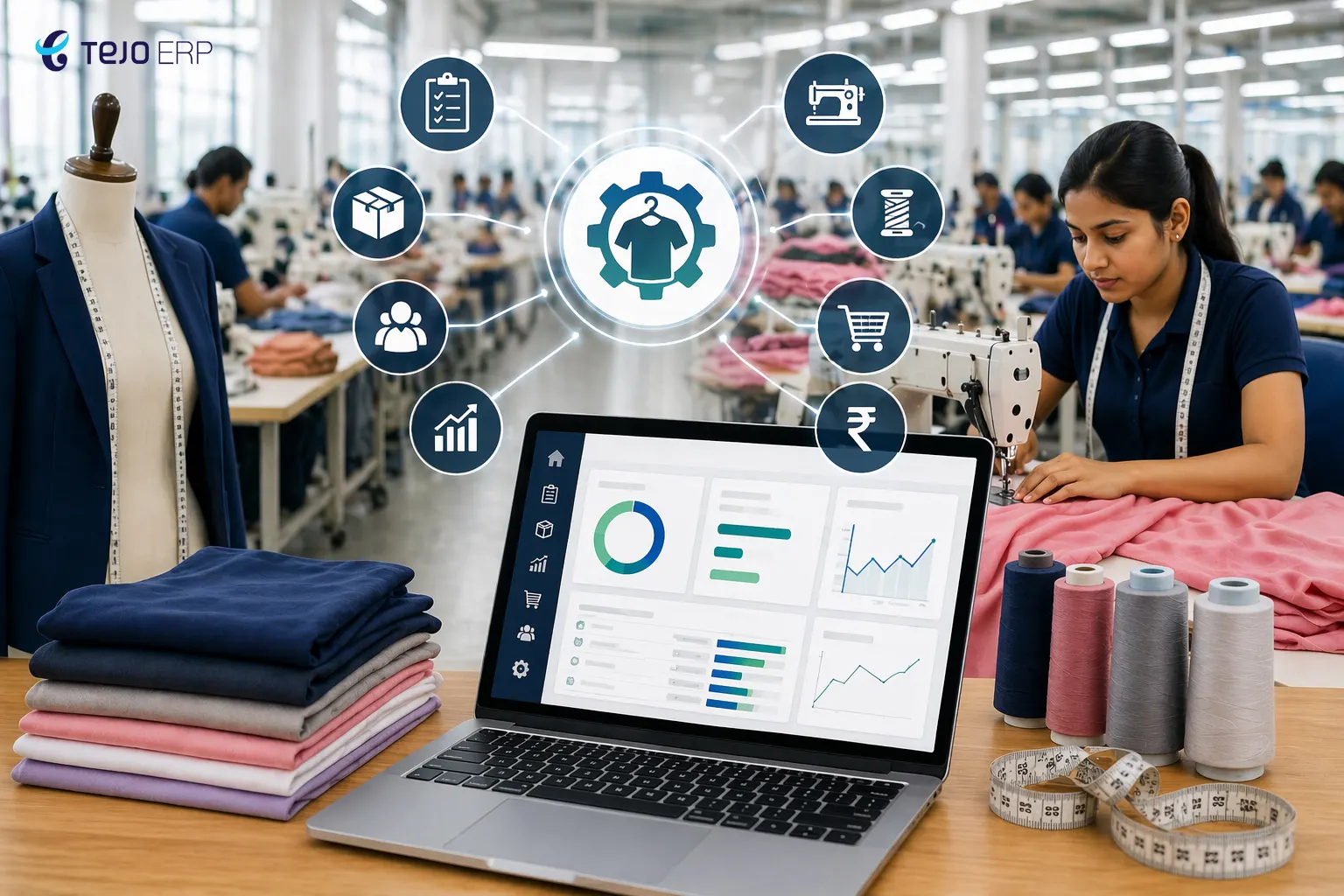
Garment manufacturing ERP Software helps manage all parts of a garment business in one place. It brings together production planning, inventory, buying, sales and money matters.
Using different tools for different tasks is not needed anymore. Manufacturers can see data, automate tasks and make smart choices fast. This means they have control over their operations and can work more efficiently. Garment manufacturing ERP Software makes it easier to run a garment business.
Common Production Challenges in the Garment Industry
Making clothes has a lot of steps like designing the clothes, getting the materials, cutting the fabric, sewing the clothes, finishing them and sending them out. Each step needs people from parts of the company to work together.
In a lot of clothing factories in India, they still use spreadsheets or separate systems that do not talk to each other. This causes problems like:
- People do not understand each other
- It takes time to plan what to make
- They do not have the amount of materials
- They waste a lot of things
- It is hard to know what is happening with the orders
These problems make it harder for the factory to manufacture garments and make money. If they do not have a system that everything is connected to, it takes a lot of time to manage the whole factory. Garment manufacturing needs a system for easier operations
Key Ways ERP Improves Production Efficiency
1. Centralised Data for Faster Decision-Making
In a garment unit, multiple departments work simultaneously, and decisions need to be made quickly. ERP brings all data into one dashboard, production status, inventory levels, and order updates so there is no delay in communication.
Managers no longer need to depend on manual reports or follow-ups. With real-time data access, decisions become faster and more accurate, directly improving production speed.
In addition, centralised data helps in eliminating duplication and confusion caused by multiple data sources. Whether it is a factory manager, store in-charge, or business owner, everyone works with the same updated information. This improves accountability and ensures that decisions are based on facts rather than assumptions, which is crucial for scaling garment operations efficiently.
2. Advanced Production Planning and Smart Scheduling
Planning production manually often leads to delays and poor resource utilisation. ERP systems use real-time data to create smart production schedules based on order priority, machine availability, and workforce capacity. This ensures Proper allocation of resources, Reduced machine idle time, and better handling of urgent orders. As a result, production becomes more organised and efficient.
Moreover, ERP systems can quickly adjust schedules in case of unexpected changes such as urgent orders, machine breakdowns, or raw material delays. This flexibility helps garment manufacturers stay agile and avoid production disruptions. Over time, this leads to improved delivery performance and stronger client relationships.
3. Real-Time Inventory Visibility and Control
Inventory issues cause production delays. Sometimes the materials we need are not available when we need them or we have too much stock that takes up the working capital.
Enterprise Resource Planning systems or ERP systems, give us a clear view of the Fabric and raw materials we have in stock, the items that are currently being worked on, and the goods that are finished. With warnings and tracking, manufacturers can avoid running out of stock or having too much stock. This means that production can keep going without any interruptions.
ERP systems keep track of our inventory by batch and by lot, which is really important when making clothes because we have to deal with different fabrics, colors and sizes. Having this much control reduces confusion in the store and makes sure we have the materials at the right time, for production. This way, inventory issues do not cause any problems, and production runs smoothly.
4. Improved Coordination Between Departments
Garment manufacturing has teams, like procurement, production, quality control and dispatch. When they don’t work together well it causes delays and confusion.
ERP connects all departments using one system. This helps them talk to each other easily, manage work better and do tasks faster. When all teams use the same information, mistakes and delays happen less often.
ERP also helps create a plan for work. Tasks get assigned, tracked, and finished within the system. This means people don’t have to rely on phone calls, WhatsApp messages or written instructions. As a result, everything runs smoothly, is more open, and is easier to handle, especially for businesses that are growing.
5. Real-Time Production Tracking and Monitoring
One of the benefits of ERP is that you can track production activities live. Managers can keep an eye on each stage of production. Quickly spot any problems.
For example, if there are delays in stitching, you can find out early. Machine downtime can be fixed fast. You can track order progress in real time. This helps you keep to your production schedules on track and work efficiently. ERP systems also produce performance reports for each department or production line. This makes it easy to see which areas are not doing well and take action to fix them.
By keeping an eye on things, you can make sure you meet your production targets every time without any last-minute rush. You can track production activities and fix problems quickly. ERP systems help you work better and meet your targets.
6. Reduction in Wastage and Better Resource Utilisation
Material wastage is a problem when making clothes, especially when we are cutting the fabric and making the clothes. ERP keeps track of required materials and available materials and also keeps track of how much material is used and making sure we do not use too much. This means we can use our resources in a way and save a lot of money.
We can also use the ERP system to look at how much material we waste over time. By finding out where and why we waste material, we can make better plans for cutting the fabric and making the clothes. It also helps us make clothes in a way that is better for the environment, which is very important to people who buy clothes today.
The garment manufacturing companies can use the ERP system to make a difference in the way they use materials and make clothes. Garment manufacturing companies can use the ERP system to reduce material wastage and make the garment manufacturing process more sustainable.
7. Automated Processes to Reduce Manual Errors
Manual processes not only take time but also increase the risk of human errors. ERP automates repetitive tasks such as Order processing, Inventory updates, Report generation. Automation reduces errors and speeds up operations, allowing employees to focus on more important tasks.
Furthermore, automation ensures consistency in processes. For example, once an order is entered into the system, all related activities, material planning, production scheduling, and dispatch can be triggered automatically. This reduces dependency on manual follow-ups and improves overall operational efficiency.
8. Better Quality Management Across Production Stages
Quality plays a major role in customer satisfaction and brand reputation. ERP systems enable manufacturers to implement quality checks at every stage of production.
If any issue arises, it can be traced back quickly to the source. This reduces rework and ensures consistent product quality.
In addition, ERP systems maintain quality records and inspection reports, which are especially useful for export businesses that need to meet strict compliance standards. This helps garment manufacturers build trust with clients and reduce the risk of rejected shipments.
9. Cost Monitoring and Profitability Insights
ERP systems give us a picture of what things cost to make, like the materials we need, the people who work on them, and the costs of running the place. Manufacturers can see which parts of the process are costing a lot, cut out things they do not need to spend money on and make more money. When we have a handle on the money side of things, we can make the production process better.
ERP systems also let us keep track of costs promptly for each order or batch of products. This helps manufacturers figure out which products bring in the money and where we need to make some changes. When we can see how the money is being spent, businesses can make decisions about how much to charge for things and how much to make, which can help the company grow over time. ERP systems are really helpful for manufacturers because they provide a lot of information about production costs, including the cost of materials, labour, and overheads, which is what ERP systems are all about.
Why Indian Garment Manufacturers Are Adopting ERP
In India, the garment industry is very competitive and also a big player in the international markets. To stay ahead, manufacturers must improve efficiency and reduce delays.
ERP adoption is growing because it helps businesses:
- Scale operations easily
- Handle custom orders efficiently
- Make customers happier
- Follow industry rules
This type of solution helps solve problems faced by Indian manufacturers. The garment industry uses ERP to work. It helps them to compete with others.They can make things faster and cheaper. This way they can sell more.
Conclusion
In today’s market, using manual methods or old systems can slow down your business. You need Garment manufacturing ERP Software to improve production and stay ahead.
ERP systems help garment makers by making operations smoother, reducing mistakes and giving updates. This helps them have control and get more done.
If you want to improve your manufacturing and need a custom solution, contact our team.
Making the choice now can help you create a more efficient garment business that’s ready for the future.
Frequently Asked Questions:
1. What is garment manufacturing ERP software?
Garment manufacturing ERP software is a specialised system designed to manage and integrate all core operations of a garment business, including production, inventory, procurement, sales, and finance. It provides a centralized platform where manufacturers can track processes in real-time, reduce manual work, and improve efficiency. This software is particularly useful for handling complex workflows in apparel manufacturing, such as managing multiple sizes, styles, and materials, ensuring better control over operations and faster decision-making.
2. How does ERP improve production efficiency in garment manufacturing?
ERP improves production efficiency by automating planning, scheduling, and tracking processes. It ensures that resources like machines, labour, and materials are used effectively without delays. Real-time data helps managers identify bottlenecks and take quick action. By reducing manual errors and improving coordination between departments, ERP streamlines the entire production cycle. This leads to faster order completion, reduced wastage, and better utilisation of available resources, ultimately increasing overall productivity.
3. Why is inventory management important in garment manufacturing?
Inventory management is crucial because garment production depends heavily on the timely availability of fabrics, trims, and accessories. Poor inventory control can lead to delays, overstocking, or production stoppages. ERP systems help track inventory in real-time, ensuring that materials are available when needed. It also prevents excess stock, which ties up capital. Efficient inventory management ensures smooth production flow, reduces costs, and improves overall operational efficiency in garment manufacturing units.
4. Can ERP software reduce wastage in garment production?
Yes, ERP software significantly reduces wastage by providing accurate data on material usage and production requirements. It helps in creating precise Bill of Materials (BOM) and tracking consumption at every stage. Manufacturers can identify areas where wastage occurs and take corrective actions. By optimising cutting plans and monitoring resource usage, ERP ensures better utilisation of materials. This not only reduces costs but also supports sustainable manufacturing practices, which are becoming increasingly important in the apparel industry.
5. How does ERP help in production planning and scheduling?
ERP systems automate production planning by analysing order requirements, deadlines, and available resources. It creates efficient schedules that ensure smooth workflow across different production stages. This reduces delays caused by manual planning errors. ERP also allows quick adjustments in case of urgent orders or disruptions. With better scheduling, manufacturers can maximise machine utilisation, reduce idle time, and ensure timely delivery of orders, improving both efficiency and customer satisfaction.
6. Is ERP software suitable for small garment manufacturers?
Yes, ERP software is suitable for both small and large garment manufacturers. For small businesses, it helps in organising operations, reducing manual work, and improving efficiency without needing a large workforce. It provides better control over inventory, production, and finances. Many ERP solutions are scalable, meaning they can grow with the business. By adopting ERP early, small manufacturers can build a strong operational foundation and compete effectively in the market.
7. How does ERP improve coordination between departments?
ERP connects all departments through a single platform, ensuring everyone has access to the same data. This eliminates communication gaps and reduces dependency on manual updates or external communication tools. For example, production teams can see inventory availability, while procurement teams can track requirements instantly. This seamless coordination improves workflow, reduces delays, and ensures that tasks are completed efficiently, leading to better overall productivity in garment manufacturing operations.
8. What are the key features of garment ERP software?
Key features of garment ERP software include production planning, inventory management, order tracking, quality control, and financial management. It also offers real-time reporting and analytics for better decision-making. Some advanced systems include automation, mobile access, and integration with other tools. These features help manufacturers manage complex processes, improve efficiency, and maintain better control over operations. Choosing the right features depends on the specific needs of the garment business.
9. How does ERP help in quality control in garment manufacturing?
ERP systems enable quality checks at every stage of production, from raw material inspection to final product finishing. It records quality data and helps identify defects early in the process. If issues arise, they can be traced back to the source quickly. This reduces rework and ensures consistent product quality. For export-oriented businesses, ERP also helps maintain compliance with quality standards, improving customer satisfaction and reducing the risk of product rejection.
10. What are the benefits of implementing ERP in the garment industry?
Implementing ERP in the garment industry offers multiple benefits, including improved efficiency, better inventory control, reduced wastage, and enhanced decision-making. It automates processes, reduces manual errors, and provides real-time insights into operations. ERP also improves coordination between departments and helps meet production deadlines more consistently. Overall, it enables manufacturers to streamline operations, reduce costs, and scale their business effectively in a competitive market.
Author Bio:

Nikita Govili
Content & Technical Writer at ExpandX
Nikita Govil is a skilled content and technical writer at ExpandX, bringing a strong background in software engineering to her work. She began her career as a software engineer in a multinational corporation, where she gained hands-on experience in diverse areas such as software testing, documentation, and project management. This technical foundation allows her to craft clear, insightful, and impactful content that bridges the gap between technology and business. At ExpandX, Nikita combines her writing expertise with her technical knowledge to deliver content that informs, engages, and supports clients in the manufacturing and ERP domains.
